Living on an acreage in Saskatchewan comes with plenty of advantages: more space, privacy, outbuildings, room for recreation and, in many cases, a greater connection to the land.
It also means your property may have risks that are different from those of a typical urban home.
Private wells, septic systems, long driveways, detached shops, barns, livestock, recreational equipment and greater distances from fire protection can all affect your insurance needs.
You may hear this type of coverage referred to as acreage insurance, but it is important to understand that “acreage insurance” is not a standardized insurance product. Depending on how your property is used, your insurance may be arranged as a residential property policy, a specialized rural property policy, a hobby-farm policy, a farm policy, or another form of coverage.
The right policy depends on your individual property and how you use it.
What Is Acreage Insurance?
“Acreage insurance” is a commonly used term for insurance designed for rural residential properties.
Unlike a typical urban residential property, an acreage may include a larger parcel of land, detached buildings, private water and sewage systems, longer driveways and approaches, agricultural or recreational activities, and other features that need to be considered when determining the appropriate coverage.
There is no single standard acreage policy used by every Saskatchewan insurer. Coverage, limits, exclusions and available endorsements can vary between insurance companies.
For that reason, it is important to tell your broker about all of the features and activities associated with your property.
Do You Need Different Insurance for an Acreage?
Not necessarily.
Owning several acres does not automatically mean you need a particular type of insurance policy. A rural property used strictly as a private residence may have very different insurance requirements from a property where you keep horses, operate a small farm, rent out buildings or run a business.
For example, your insurance needs may be different if you have:
- A private well and septic system
- A detached garage or large shop
- A barn or other agricultural buildings
- Horses or other livestock
- Farm machinery or equipment
- A private road or long driveway
- Fuel or propane tanks
- A pond or other recreational features
- A home-based business
- Rental or short-term rental accommodations
- Agricultural activities or commercial farming operations
The important question is not simply how many acres you own. It is how the property is used and what is located on it.
Residential Acreage
A residential acreage is generally a rural property used primarily as a private residence.
For example, you may have a house, detached garage, shop, garden, trees and recreational equipment, but no significant farming or commercial operation.
A residential property policy may provide coverage for the dwelling, personal property, detached structures and personal liability, subject to the terms, limits and exclusions of the policy.
However, rural properties can have additional considerations that should be discussed with your broker.
These can include private wells, septic systems, outbuildings, long driveways, fuel tanks, recreational equipment and distance from fire protection.
Hobby Farms and Acreages With Livestock
Some acreage owners keep horses, chickens, cattle or other livestock without operating a full-time commercial farm.
This is sometimes referred to as a hobby farm.
It is important not to assume that a standard homeowner policy automatically provides adequate coverage for agricultural activities or livestock.
Depending on the circumstances, additional coverage or a different type of policy may be appropriate.
Your broker should know about:
- Livestock and horses
- Agricultural buildings
- Farm equipment
- Crops or hay
- Animal boarding
- Breeding activities
- Selling farm products
- Agricultural activities performed for others
- Any income generated from the property
In particular, let your broker know if you care for or board animals belonging to someone else. This can create liability exposures that are different from simply owning your own personal livestock.
Working Farms
A working farm has substantially different insurance needs from a rural residence.
Farm insurance can address a range of property and liability exposures associated with agricultural operations. Depending on the operation, this can include farm buildings, machinery, equipment, livestock, farm products and other property or activities.
The appropriate coverage depends on the nature and size of the farming operation.
If you are purchasing a property that has previously been operated as a farm, or you plan to begin farming after purchasing an acreage, talk to your broker before assuming your existing home insurance will be sufficient.
Wells and Private Water Systems
Many Saskatchewan acreages rely on private wells rather than municipal water systems.
The well itself and related equipment may have coverage under certain policies and for certain causes of loss. However, coverage can vary depending on the policy and what caused the damage.
For example, mechanical breakdown, deterioration, maintenance issues or other excluded causes may be treated differently from sudden physical damage caused by an insured peril.
When insuring an acreage, ask your broker how your policy treats:
- The well
- Well pumps
- Pressure tanks
- Water lines
- Other private water-system equipment
Do not assume that every component of a private water system is automatically covered.
Septic Systems
Private septic systems are another common feature of Saskatchewan acreages.
As with wells, the availability and extent of insurance coverage can depend on the policy and the cause of the loss.
A septic tank, pumps, pipes, drainage components and other parts of the system may not all be treated the same way under every policy.
Maintenance, deterioration, wear and tear and certain other causes of loss may be excluded.
If your property relies on a septic system, ask your broker what your policy covers and whether additional coverage is available for particular risks.
Outbuildings, Shops, Garages and Barns
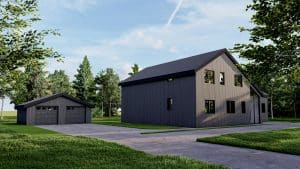
One of the biggest differences between an urban home and an acreage can be the number and size of detached structures.
An acreage might have:
- Detached garages
- Shops
- Storage buildings
- Barns
- Sheds
- Greenhouses
- Other accessory buildings
Residential insurance can provide coverage for certain detached structures, but limits and conditions vary by policy.
It is important to make sure your insurer knows about all significant buildings on the property and that the insured values are appropriate.
A large heated shop, for example, can represent a substantial replacement cost that should not be overlooked when arranging insurance.
The contents of those buildings should also be discussed. Tools, machinery, recreational equipment, farm equipment and business property may be subject to different coverage provisions.
You can learn more about outbuilding insurance here.
Driveways, Approaches and Private Roads
Rural properties often have longer driveways, private approaches or roads that would not be found on a typical urban residential property.
Damage to these areas can be expensive to repair, particularly following severe weather, erosion, flooding or washouts.
However, homeowners should not assume that damage to a private road, approach or driveway is automatically covered simply because the road is located on the insured property.
Coverage depends on the policy wording and the cause of the loss.
If your property has a significant private road or approach, ask your broker specifically how it is treated under your policy.
Shelterbelts, Trees and Landscaping
Many Saskatchewan acreages have extensive trees, shelterbelts and landscaping.
Residential insurance may provide some coverage for trees and shrubs following certain insured losses, but coverage is generally subject to policy conditions and limits.
The amount of landscaping on an acreage can be substantially greater than that of a typical residential lot, so it is worth discussing the issue with your broker if the value of your shelterbelt or landscaping is significant.
Do not assume that all trees or shelterbelts are automatically covered for every type of loss.
Fuel and Propane Tanks
Rural properties may use heating oil, propane or other fuel systems for homes, shops, agricultural buildings or equipment.
These systems can create additional property, liability and environmental risks.
Coverage for the tank itself, accidental fuel release, contamination and environmental cleanup can vary significantly depending on the circumstances and the policy.
If you have an above-ground fuel tank, propane tank or other fuel-storage equipment, tell your broker.
It is especially important to discuss the issue if you store fuel for agricultural or commercial purposes.
Fire Protection and Distance From the Fire Hall
The location of an acreage can affect insurance considerations.
Rural properties may be farther from responding fire departments than homes in urban areas. Insurance companies can take fire protection and the property’s distance from a responding fire hall into account when determining eligibility, classification and premium.
Some insurers use distance-based thresholds, while others may use different criteria.
Building-code requirements are a separate issue. Saskatchewan’s building and fire codes include requirements related to fire protection and fire-department response capabilities in certain circumstances.
For this reason, the distance to the nearest fire hall is useful information to discuss with your broker when purchasing an acreage.
Your broker can determine how the property is classified by the insurer and whether its location affects the available coverage or premium.
Liability on an Acreage
Liability is another important consideration for rural property owners.
A larger property can create exposures that may not exist on a typical urban lot.
Examples can include:
- Guests being injured on the property
- Recreational activities
- Pools and ponds
- ATVs and other recreational vehicles
- Livestock
- Horses
- Falling trees
- Outbuildings and equipment
- Snow and ice
- Agricultural activities
- Boarding or caring for animals belonging to others
- Home-based businesses
Your personal liability coverage is designed for certain personal activities, but business and farming activities may require additional or different coverage.
Always tell your broker about activities that generate income or involve members of the public.
Home-Based Businesses on an Acreage
A rural property is sometimes used for more than a residence.
You may operate a business from a shop, garage or other building on the property, or conduct business activities from the home.
Examples could include:
- Contracting
- Welding or fabrication
- Equipment repair
- Professional services
- Online businesses
- Agricultural sales
- Animal boarding
- Rental accommodations
- Short-term rentals
A standard home insurance policy should not be assumed to provide adequate coverage for business property, business liability or business operations.
Tell your broker about any business activity before purchasing the policy.
What Should You Tell Your Insurance Broker?
When insuring an acreage, the more complete the information you provide, the easier it is for your broker to identify the appropriate coverage.
Be prepared to discuss:
Property and buildings
- The size and location of the property
- The age and construction of the home
- Detached garages and shops
- Barns and agricultural buildings
- Other outbuildings
- Approximate replacement costs
Utilities and services
- Private wells
- Septic systems
- Heating systems
- Fuel or propane tanks
- Private roads and approaches
Property use
- Whether the property is strictly residential
- Farming or agricultural activities
- Livestock
- Horses
- Boarding animals
- Rental arrangements
- Home-based businesses
- Recreational activities
Equipment and contents
- Tractors
- Farm equipment
- ATVs and recreational vehicles
- Tools
- Machinery
- Contents stored in detached buildings
Fire protection
- The property’s location
- The responding fire department
- Distance from the fire hall
- Any other relevant fire-protection information
Your broker can use this information to determine which insurance product and coverage options are appropriate for your situation.
Buying an Acreage? Talk to Your Insurance Broker Before You Close
Insurance should be part of your acreage-buying process—not something you arrange after the purchase is complete.
Before buying a rural property, provide your broker with as much information as possible about the home, buildings, property use and rural services.
In some cases, the property’s location, construction, fire protection, outbuildings or intended use can affect the insurance that is available.
Getting an insurance quote before making an offer can help you understand the cost and identify potential coverage issues before you commit to the property.
Acreage Insurance in Saskatchewan
At Cooke Insurance, we understand that no two rural properties are exactly alike.
Whether you own a residential acreage, have a hobby farm, keep horses or livestock, or operate a larger agricultural operation, our team can help you understand the insurance options available for your property.
We can review the characteristics of your property, how you use it and the coverage you need, then help you find an insurance solution appropriate for your situation.
If you’re buying an acreage or reviewing the insurance on your existing rural property, contact Cooke Insurance to discuss your options.
Frequently Asked Questions
Is acreage insurance different from home insurance?
“Acreage insurance” is a commonly used term for insurance for rural residential properties, but it is not a standardized insurance product. Depending on the property and how it is used, coverage may be arranged under a residential, rural property, hobby-farm, farm or other policy.
Do I need special insurance if I live on an acreage?
Not necessarily. The appropriate insurance depends on the property and how you use it. A rural residence with a house and garage may have different insurance needs from a property with livestock, farm equipment, agricultural buildings or a business.
Does home insurance cover a well?
Coverage for a private well and its components depends on the policy and the cause of the damage. Ask your broker how your particular policy treats your well, pump and related equipment.
Does home insurance cover a septic system?
Coverage for septic systems varies by policy and the circumstances of the loss. Certain damage may be covered while maintenance, deterioration, wear and tear or other excluded causes may not be.
Can I insure a hobby farm with home insurance?
You should not assume that a standard home insurance policy provides adequate coverage for a hobby farm. Livestock, agricultural buildings, equipment and farming activities may require additional coverage or a different policy.
Does home insurance cover detached buildings?
Many residential policies provide some coverage for detached structures, but the amount of coverage and the definition of an insured structure vary. Make sure your insurer knows about all significant buildings on your property and that the available limits are appropriate.
Does insurance cover a private road or driveway?
Coverage varies by policy and by the cause of the damage. Do not assume that damage to a private road, approach or driveway is automatically covered.
Does being far from a fire hall affect acreage insurance?
It can. Insurance companies may consider the property’s fire protection and distance from a responding fire hall when determining eligibility, classification and premium. The exact requirements vary by insurer.
How much does acreage insurance cost in Saskatchewan?
There is no standard price for acreage insurance. Premiums can vary significantly depending on the home’s replacement cost, location, construction, outbuildings, fire protection, claims history, property use, livestock, equipment and coverage selected.
The best way to determine the cost is to have a broker review the specific property and obtain a quote.
Get an Acreage Insurance Quote
Your acreage is more than just a house on a larger lot. The buildings, land, utilities, equipment and activities on the property can all affect your insurance needs.
If you’re purchasing an acreage in Saskatchewan or want to review the coverage on your existing rural property, contact Cooke Insurance to discuss your options.